Wednesday, 6 May 2020

SOLAR ENERGY BUSINES 101


Executive Summary

This project for Solar Energy System Installations and Energy Efficiency 
Retrofits (SEER) is designed to be financially profitable, technically feasible
and good for investors, customers, staff, the community at large, and the 
environment. 

 VISION 
The modern world offers huge potential. More people are better educated 
than ever before and scientific knowledge and technology offers solutions to most of the world's problems. 

The responsibility of business is to ensure that
there is economic activity that helps the world to progress, and initiatives 
that address the subject of solar energy and energy efficiency are a priority 
for this.

Goals and Objectives

The goals of this project for Solar Energy System Installations and Energy 
Efficiency Retrofits (SEER) is to be an efficient organization to implement 
these SEER activities and to do it in a way that the organization is 
financially profitable and therefore sustainable, so that investors have a low 
risk and safe investment opportunity, that customers get a good outcome and
society as a whole gets a positive impact.

The Investment Opportunity

The energy industry is a major area for investment, and policy makers in the 
US and elsewhere are looking to this sector to be the driver of future 
prosperity. The basic economics of energy and developments in technology are making the area of Solar Energy System Installation and Energy Efficiency Retrofits increasingly attractive. SEER is positioned to grow in this segment of the I energy market.

Sector studies show the vast potential of this segment of the market. Some well known investors including Warren Buffet have make long term 
investments in the sector. 
But the studies do not explain why the growth of that sector has been quite 
slow relative to the potential. 

Our financial analysis suggests that this is 
because there are mismatches between the needs of the consumer and the structure of the suppliers of the systems and the financing. 

The SEER project
addresses this constraint. 

Strategy. Organization and Management
Accordingly, SEER has a strategy is to build to the maximum extent possible
on what exists rather than to do create something new. The working level of 
the project uses existing contractors who are good at the practical work but 
get constrained by complex incentives, regulations and paperwork. 
The strategy responds to the fragmented nature of the contracting market and
respects the unique strengths of this community, including the role that local 
business plays in strengthening local community.
At the same time the project is organized so that the major issues of 
financing, negotiating incentive opportunities and ensuring good design and 
quality control are handled with units that address these matters: 
(1) A 
'holding' entity with financing unit; and 
(2) A project management and oversight entity.
Financing Plan and Profitability

The proposed financing is a $25 million loan instrument with an effective interest of 4% per annum and repayment in 15 years. 

The base scenario shows that that this funding will enable the SEER project 
to become profitable in Year 3, and grow in profitability thereafter. 
Repayment of the loan will be possible well before the maturity. 
Risk
While there are all the normal risks of business, the financial and economic 
risk is small. The trends of technology should make the future of this 
segment of the energy sector more profitable not less, and future higher 
prices for fossil based energy makes the SEER project more attractive, not less.

Keys to Success 
The key to SEER's success will be the careful matching of competence and cost. 

The project is based on:
• the availability of modern technology that enables solar systems to be 
economical; and
• old fashioned hard work and supervision that makes it possible for 
decent wages to be paid while achieving low cost results.

SOLAR ENERGY SIZING IDEAS


5 Ways to Grow Your Distribution Business

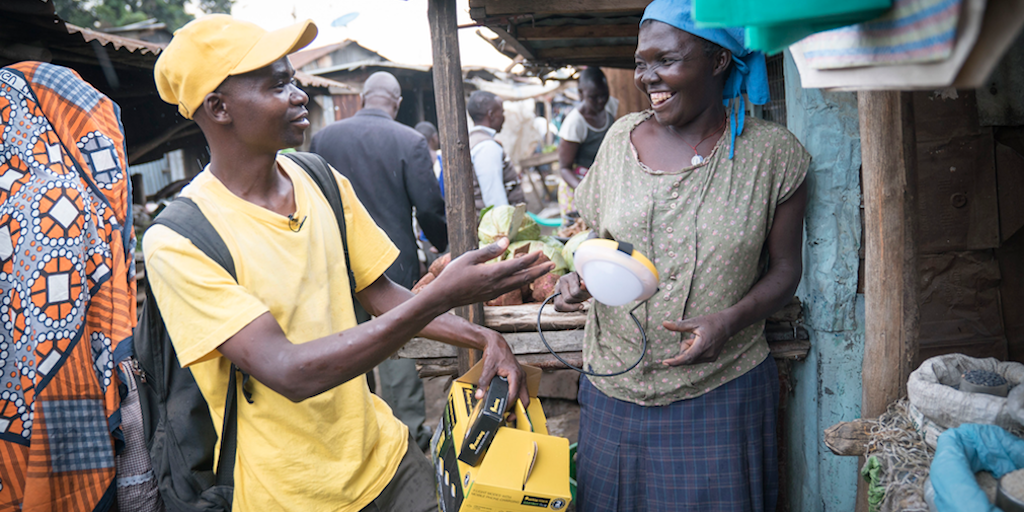
Running a product distribution business for consumers in emerging markets is a complex operation with many moving parts, from managing inventory and sales agents to identifying qualified consumers, to managing installment payments. Growing this sophisticated business model takes considerable strategizing and coordination. Since 2012, Angaza has supported the growth of over 150 last-mile distributors in emerging markets. Here are five tactics we’ve identified to help distributors scale their businesses.


1. Offer Multiple Payment Plans

Because consumers want payment flexibility, tapping into this market demand can be fruitful to distributors. They can expand their client reach by offering multiple payment plans — upfront cash sales and pay-as-you-go financing — to meet potential clients’ preferences. With upfront cash sales, businesses receive the full amount of the product as hard cash or mobile money payments at the point of sale, immediately increasing their cash flow. This payment plan, however, can leave out a segment of the market that cannot, or prefers not, to pay for products in one single payment.

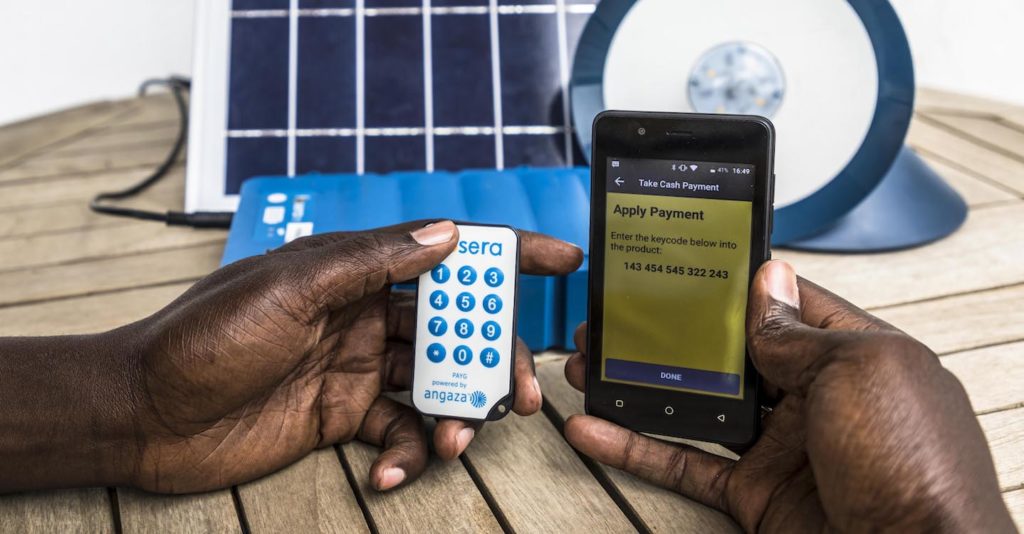
Distributors can attract prospects who find upfront cash sales cost-prohibitive with pay-as-you-go (PAYG) loans. Through pay-as-you-go financing, clients are able to affordably purchase products through installment payments until the products are paid for in full or they can rent in perpetuity. Companies decide the exact loan terms and payment method, including the down payment amount, the installment payment size and schedule, and whether to accept cash, mobile money or both.

To mitigate the risk financial loans carry, distributors can determine which prospects are low-risk by exploring their ability to pay on time. Using the Angaza Activator app, distributors collect information on their prospects’ income, expenses and credit history to assess prospects’ creditworthiness and define loan terms before making sales. And, to increase the likelihood of timely payments, they build their portfolio with products designed specifically for PAYG sales.


2. Expand Product Portfolios

Product needs and desires vary from one consumer to the next. Beyond the products distributors sell to current clients, they can explore what else to add to their portfolio. What products might their clients consider buying next? Is the demand different for their prospects compared to their clients? Is there a market they haven’t yet tapped into for smaller products, such as solar lamps; or for higher-end products, such as TVs and laptops?

Expand product portfolio with PAYG products Researching product demand for their current clients, prospects, and other markets

enables distributors to strategically expand their product portfolio

Distributors can consider expanding their portfolio with pay-as-you-go enabled versions of in-demand products. At Angaza, we work with manufacturers who offer high-quality devices embedded with our pay-as-you-go metering and monitoring technology. These products, ranging from solar home systems to agribusiness products, enable distributors to enforce loans by automatically activating or deactivating the product based on clients’ payment.

Thanks to the monitoring component of devices enabled with GSM cellular technology, distributors can remotely diagnose and address a range of issues, helping them gain powerful operational insights and provide superior client support. The GSM-enabled products’ capabilities include providing device health and location data, and even tamper alerts.


3. Accept Mobile Money Payments 

With the widespread consumer adoption of mobile money in many parts of the world, accepting mobile money payments can cast a wider net for potential clients than accepting cash alone. Using mobile money payments has additional benefits for distribution businesses; digital payments provide them a secure, efficient, and more cost-effective method of payment collection than cash. For example, distributors can reduce the frequency with which their sales agents need to travel to collect cash from their clients for pay-as-you-go loans.

Accept mobile money payments 

Distributors are increasingly incorporating mobile money payments to securely and efficiently collect payments

Because of Angaza’s numerous integrations with global mobile network operators, our distribution customers have over 30 mobile payment integrations across 16 countries to take advantage of.


4. Use Digital Tools for Analysis and Automation  

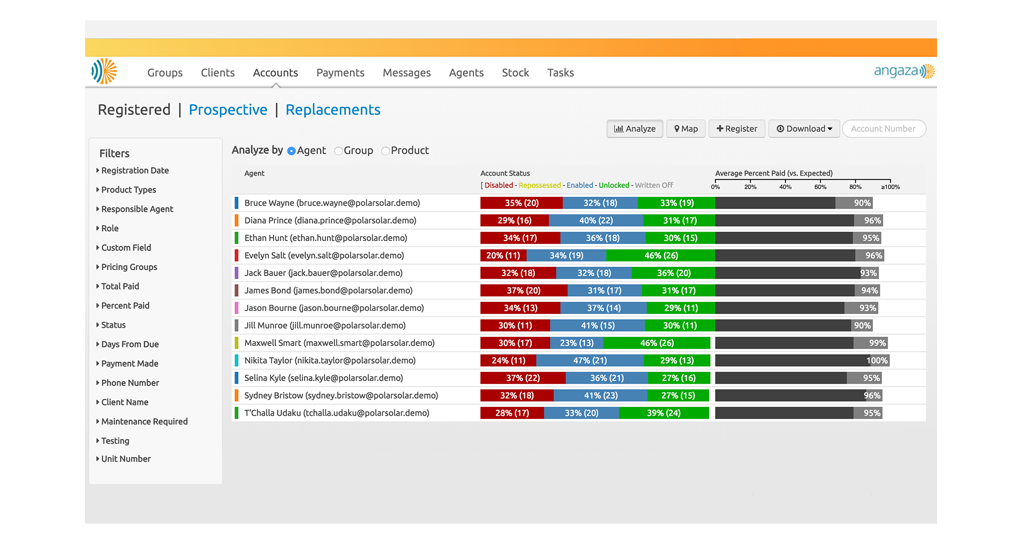
By digitizing their operations and centralizing their data, distributors can automate operations, increase efficiency, and unlock valuable insights. Our customers’ sales agent networks use our Android Activator app to conduct sales and track their clients’ payments. Because the app syncs with the Hub platform, their data is stored in one central location for managers to view, manage, and analyze.

Use digital tools for automation and analysisThe Angaza platform is specifically designed for last-mile distributors

to increase efficiency, gain insights, and drive decisions

With effective monitoring and analytics tools, distributors using Angaza’s platform track their inventory movement in the field, identify the most popular products in their product portfolio and regions with the highest sales, and view and compare sales agents’ performance. If offering pay-as-you-go loans, they can view their clients’ payment status and who is at risk of defaulting on their loan. Then, they leverage data to drive their distribution business operations, such as increasing the number of products available in regions where they’ve performed well, auto-sending payment reminder SMS messages to clients, and formulating an effective plan to secure payments from clients at risk of defaulting on their loans. And, by integrating with other software, distributors can effortlessly synchronize their operations.


5. Increase Clients’ Lifetime Value

Distributors can increase their clients’ lifetime value through excellent customer service and high-quality products so that their clients are more likely to purchase additional products from the company they trust. Given the demand for higher-end products like TVs and smartphones, distributors have opportunities to sell products with higher value to their repeat clients.

These high-cost products may be more appealing to clients when combined with pay-as-you-go financing. If providing PAYG loans, distribution businesses can use their clients’ payment history to identify who is more likely to stick to the loan terms. If selling products that are not PAYG enabled, they can leverage clients’ PAYG enabled products as collateral. Distributors use Angaza’s Remetering feature on the Hub to enforce loans by reactivating the metering functionality in their clients’ fully paid PAYG enabled products. If a client is late on their payment for the new, non-PAYG enabled product, their metered product deactivates until they make a payment.

To market new products that have come online recently, our distributor partners can send bulk SMS messages from the Angaza platform.


To learn more about how you can grow your distribution business with Angaza, visit our solution page or contact us.


No comments:

Post a Comment