
HOW TO CREATE YOUR OWN 30 DAY CHALLENGE… IN A DAY
If you sell any type of problem-solving product, course, or service, then you know there's one big obstacle we all face:
Motivating customers to TAKE ACTION!
Most people get excited when they first see a solution that will help them tackle their biggest issues. They download the e-book, sign up for the course, buy the video series…. and take the first action. But motivation starts to sputter out as day-to-day life intrudes or results are slow to come.
That's where running some type of 30 day challenge can have a huge impact on success. And not just the success of your customers, but also the growth of your business.
A ‘challenge' in this sense of the word is a series of actions that your participants take every day for a set period of time. You tell them what to do each day, they take that mini action, and you continue to motivate them until they see the targeted results. And it doesn't have to be 30 Days. It could be 7 days, 14 days, 30 days, or even 100 days!
For example, here are a few popular challenges I found just by searching on Facebook:

So what do you need to do to create an effective challenge?
Here's the high-level overview (we created a planning worksheet you can download further down the post):
1. Begin with the Desired Result
Identify the goal for your challenge in terms of how it will benefit your business. You're not creating a challenge just for the sake of it. There has to be a tie-in with your own business goals. Do you want more sales as a result? More customer testimonials and success stories?
Your business goal will help you determine the type of challenge you run, who participates in it, and how you structure it.
2. Develop Challenge Ideas
Identify exactly what you will be challenging people to do.
A great way to get ideas is to look at what your competitors have done, or are doing now. Then look at what your own customers find most challenging or have been asking you about most often.
Pick the focus for your challenge and make sure it's something achievable. Set the time-frame for the challenge based on how long you think it will realistically take to achieve a result. It doesn't have to be 30 days!
3. Choose an Environment
Will your challenge be online, in-person, or a combination of both. Depending on the venue, you will need to create different types of content.
4. Choose Your Audience
Create a profile of your target challenge participant. Will your challenge be open to everyone or just to a specific group of people, such as your current customers?
5. Budget Appropriately
How much will you spend on putting together and running your challenge? For example, do you need to outsource anything? Will you pay for advertising? Do you need to buy some content to use as your starting point (eg from Content Sparks)?
6. Choose Your Distribution Channel and Create Your Content
Outline exactly what content you need to create, where you will distribute it, and when. For example, what content do you need to send to participants each day? What content will you post on social media during the challenge?
Make sure all your content follows a logical, step-by-step flow that guides your participants and motivates them to complete the challenge.
7. Outline Your Pre and Post-Challenge Marketing Plan
What tactics will you use to attract people to your challenge and what tools will you use? How will you gather data and stories from participants after the challenge? How will you build buzz for the next challenge?
What metrics will you track to monitor the success and effectiveness of the program?
And, while you're at it, what types of products and services can you market to challenge participants after the challenge?
8. Launch and Manage Your Challenge
If you've already answered the questions and completed the previous 7 steps, you're ready to launch your challenge. To make sure it goes smoothly, make a list of all your action steps and deadlines. Here's where a trusty project management system comes in handy. We love asana.
So that's the big picture for the steps to follow to create your 7, 14, 30, 60 or whatever number of days challenge.
You can download our free 8-Step Customer Challenge Planning Worksheet to help you plan your own challenge by clicking on the box below:
But as you can probably already guess, one of the most time-consuming parts of all of it is the content creation.
Luckily, you don't have to create all the content from scratch!
Here's how you can pull together your own 30 Day Challenge in a day or so, using your ready-to-go content from Content Sparks.
Let's use a previous course of ours called 10 Days of List Building Madness as a first example you could pull content from. (Sorry, this one is no longer for sale.)
Options:
- Pull out one chapter and break it down over a period of days
- Take a larger section or the full course and break it down over a longer period
You'll need to fill in any gaps or delete content, just like you would with any done-for-you course, based on what your challenge participants know or don't know already.
In the 10 Days of List Building, each chapter is broken into 10 points. And each has a learning activity. However, some of the activities are longer and couldn't be done in one day.

Table of Contents for 10 Days of List Building Madness
To make this into a 30 Day challenge vs. 10 Days, you would just give people a few days to complete each of the assignments. The longer each task takes to complete, the higher your drop-out rate is going to be. Stick to no more than 1 hour per day, with things that take longer broken down over several days.
Or you could just pull out the parts of the course that take less time and that you want to make sure people achieve in a 10 day period.
For example, the chapters in which they define the purpose for their list, set up their list, and define their audience can each be done in a day.
Here's what the content for the ‘setting up your list' chapter looks like now:
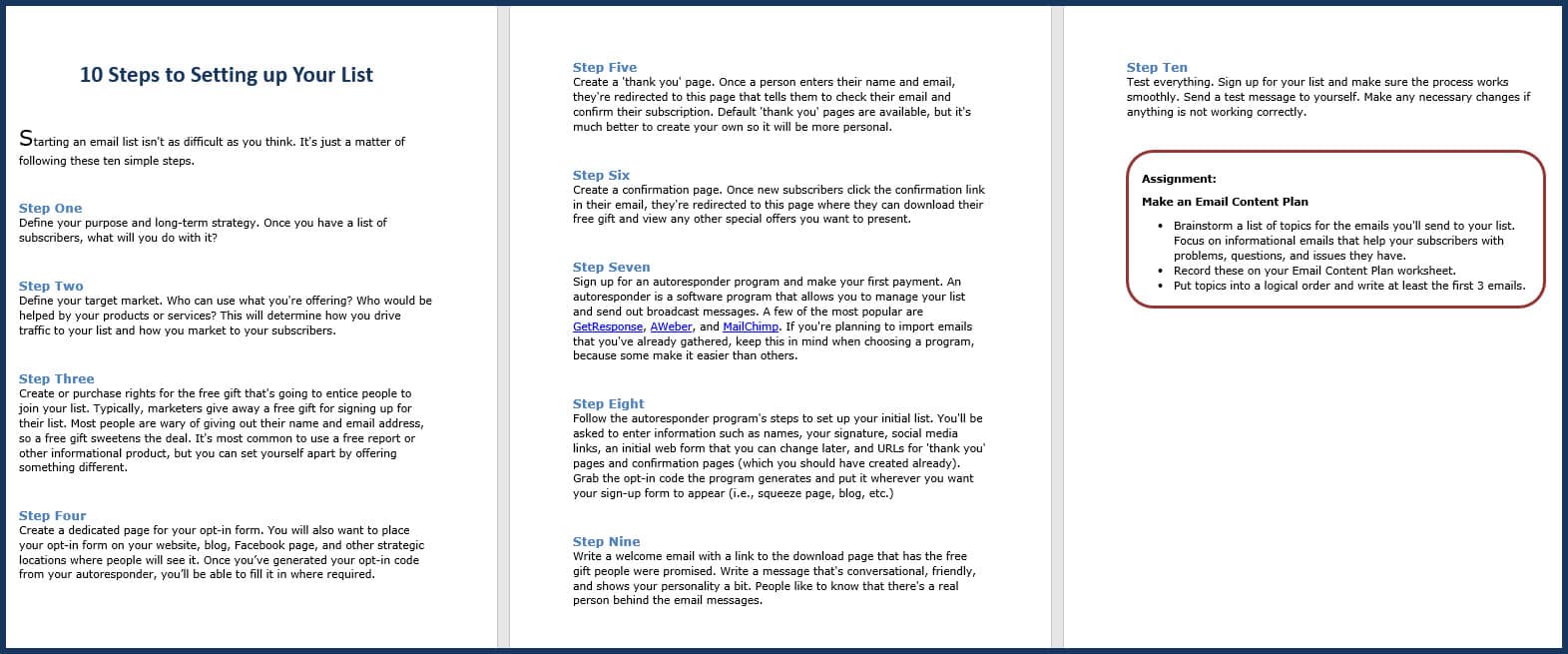
Contents for ‘Done for You' Chapter on Setting Up Your List
However, the chapter on creating your lead magnet might be 2 days – one for brainstorming and one for creating it, which might need more direction. If you also have a license for our List Building Lead Magnets package, you could pull content from there to provide the extra direction. Or even give your customers a template for creating their own freebie checklist.
The chapter on creating your squeeze page could also be split up, but you could add a short video of your own showing them how to use LeadPages or another tool to create an opt-in page quickly. Make sure you add your own affiliate link!
For the actual content you send to people each day, you'd just pull the chapter content, put it into an email and/or on a hidden blog post (with a link in your email), provide a link to download the relevant worksheet, and schedule the emails to send out over the relevant period of time.
For example, here's what a pdf of that chapter on ‘setting up your list' could look like as the ‘Day 2' content for your challenge:

Repurposed Content from List Building Madness – for Day 2 of Challenge
You see how similar it is to the original? All I did was add my branding, change the title of the day, and alter the assignment a little.
Are you starting to see how you can create your challenge content quickly, but still add your own value?
Here's another example:
In our course on Exercises in Creativity and Innovation, people evaluate their creativity characteristics, identify the best environment for their creativity, and they go through several exercises for nurturing their creativity. Then they look at barriers to overcome, some tools to help them out, and they do some review and planning.

Exercises in Creativity and Innovation – kitoe of Contents
For a 30 Day Creativity Challenge, you could break up the content over the course of the 30 days, having people do the exercises more than once. For example, with the exercise on ‘think like a child', you could ask them to do it each day for 4 days in a row.
Here's what that challenge could look like over 30 days:
Day 1 – Introduction
Day 2 – Evaluate Your Creativity
Day 3 – Establish Your Creative Nurturing Environment
Days 4 to 7 – Free Writing
Days 8 to 11 – Randomize
Days 12 to 15 – Do the Opposite
Days 16 to 19 – Think Like a Child
Days 20 to 23 – Mind Mapping
Days 24 to 27 – SCAMPER
Day 28 – Identify Your Barriers
Day 29 – Create Your Creativity Action Plan
Day 30 – Share Your Successes
There's a workbook with almost all of our courses, so you'll already have something to send along with the relevant chapter. Just tailor it to your audience.
And ideally, you'd also create a Facebook Group like the earlier examples where people can share their successes and obstacles during the challenge. If you already have a Facebook Group, you could ask people to use a hashtag when they post.
That way, you'll be building a supportive community and giving people something to talk about and learn from.
As you can see, creating your own 30 Day Challenge (or 10, 14, 60, 90 days) doesn't have to be a mountain of work. You can create the core content using Content Sparks products. Then spend the remainder of your time on marketing your challenge and interacting with your participants to give them support.
There will also be lots of opportunities to sell relevant courses and infoproduct to help people on areas where they got stuck later. So be sure to keep track of issues you can help with.
Are you ready to create your own customer challenge? We put together an 8-Step Worksheet you can use for planning your challenge, whether it involves using done-for-you materials from Content Sparks or creating your own from scratch.
How To Prepare, Plan And Launch A 7 Day Challenge
Let’s chat about how to prepare, plan and launch your first or next challenge!
Challenges can be for any length of time (5 days, 7 days, 30 days, etc.), and are particularly common in the health, fitness and business niches. Some examples you may have seen include:
- 7 Days To Stronger Abs
- The Free 5-Day Smoothie Challenge
- The 30-Day Creative Writing Challenge
- Create And Launch Your First Website In 14 Days
These challenges are typically free, and are typically delivered (at least in part) via email or perhaps a Facebook group.
Some challenges are super simple, basically just consisting of a single blog post and/or infographic listing 7/14/30 bullet points. This ISN’T the type of challenge I’ll be talking about in this blog post.
This will share exactly how to prepare, plan and launch a challenge that will help you:
- Build your email list
- Increase your social media followers
- Create an engaged community on social media
- Build your reputation as an expert in your field, and
- Make you money!
Let’s get moving!
Come up with an idea for your challenge
This is where it all begins. While these challenges are most common in the health and business niches, ANY business in ANY industry can benefit from them.
Need some inspiration? Here are a few challenges that may trigger some ideas for your business.

My 30-Day List Building Challenge consisted of daily emails that showed business owners exactly how to grow their email list….fast. The challenge included exclusive access to a dedicated Facebook group where participants could ask questions, receive additional training, and support one another.
Let’s chat about how to prepare, plan and launch your first or next challenge!
Challenges can be for any length of time (5 days, 7 days, 30 days, etc.), and are particularly common in the health, fitness and business niches. Some examples you may have seen include:
- 7 Days To Stronger Abs
- The Free 5-Day Smoothie Challenge
- The 30-Day Creative Writing Challenge
- Create And Launch Your First Website In 14 Days
These challenges are typically free, and are typically delivered (at least in part) via email or perhaps a Facebook group.
Some challenges are super simple, basically just consisting of a single blog post and/or infographic listing 7/14/30 bullet points. This ISN’T the type of challenge I’ll be talking about in this blog post.
This will share exactly how to prepare, plan and launch a challenge that will help you:
- Build your email list
- Increase your social media followers
- Create an engaged community on social media
- Build your reputation as an expert in your field, and
- Make you money!
Let’s get moving!
Come up with an idea for your challenge
This is where it all begins. While these challenges are most common in the health and business niches, ANY business in ANY industry can benefit from them.
Need some inspiration? Here are a few challenges that may trigger some ideas for your business.
My 30-Day List Building Challenge consisted of daily emails that showed business owners exactly how to grow their email list….fast. The challenge included exclusive access to a dedicated Facebook group where participants could ask questions, receive additional training, and support one another.
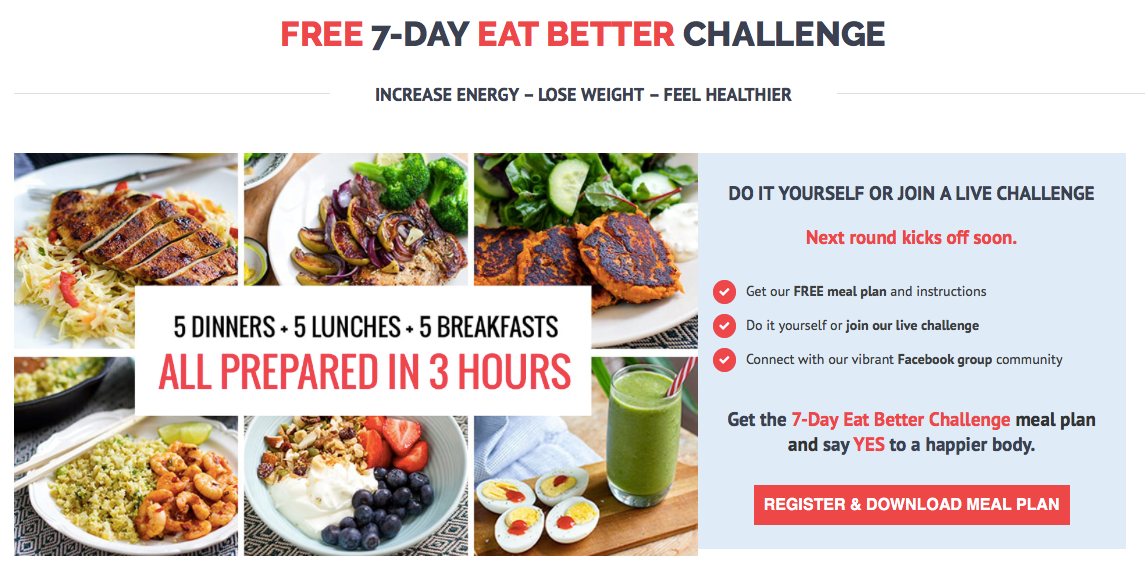
The free 7-Day Eat Better Challenge from Happy Body Formula offers participants seven days of healthy meal plans, and gives them access to a Facebook community where they can ask questions and swap recipes. There’s an option to do the challenge on your own schedule, or to join a live challenge with a cohort of other participants.
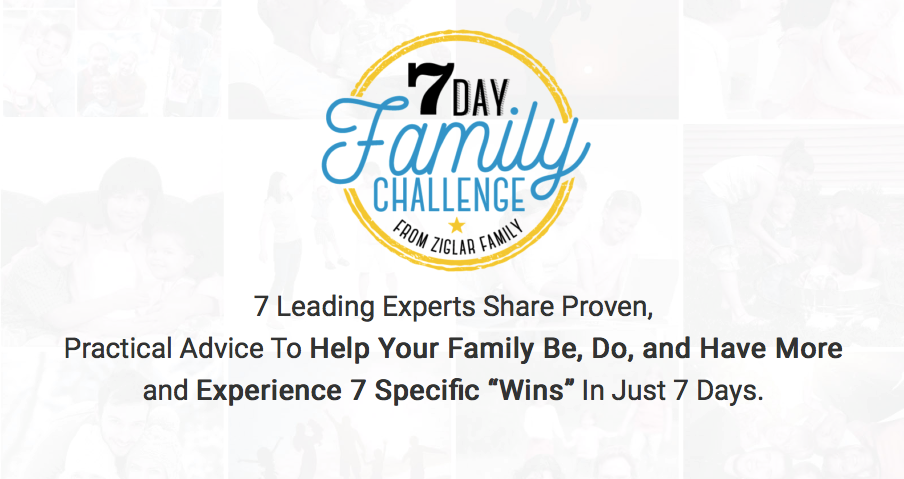
The 7-Day Family Challenge promises practical tips for helping your family “be, do and have more”. It covers communication skills, work-life balance, finances, and more, with each day of the challenge being led by an expert in the field.
As you can see, each of the challenges above are different in terms of niche and focus, but all take the same approach: daily inspiration and tips to help participants set a goal and achieve it within a set period of time.
Some tips when choosing your own challenge topic:
- Make sure the goal is actually attainable within the period of time you’ve set. E.g. “Get 100 Clients in 7 Days” is probably not realistic!
- Choose a topic that your audience is already interested in/struggling with. In other words, make it highly relevant to your audience.
- Make sure it’s a topic you know well so you can provide true value through your challenge.
- Take some time to think about how long your challenge should be given your audience. For instance, if your audience is time-strapped moms, you may want to run a 7-day challenge as opposed to a 30-day one.
OK….have an idea for your own challenge? Then it’s time to figure out how you’re going to deliver content to your participants.
Set up a series of emails and an optin form
As mentioned earlier, there are many benefits to creating a challenge for your business. But perhaps the biggest benefit is building your email list.
How does it work?
In order to join your challenge, participants will need to sign up with a valid email address. They will then receive regular (usually daily) emails from you that help them complete the challenge.
Each email should give practical, actionable tips that will move participants closer to their goal. For instance, for a “get in shape” challenge, you might send daily meals, exercises and a motivational story.
For a “get more clients” challenge, you might offer one task a day participants need to complete in order to find and book one new client.
Since your challenge is likely going to be carried out largely by email, it’s important you use an email marketing service (I recommend aWeber!). This is particularly important if you want participants to be able to join your challenge at any time (as opposed to a live challenge where you all work through it together).
While it’s beyond the scope of this post to give detailed instructions on setting up an email sequence, here’s a brief overview:
- Create an email list just for your challenge
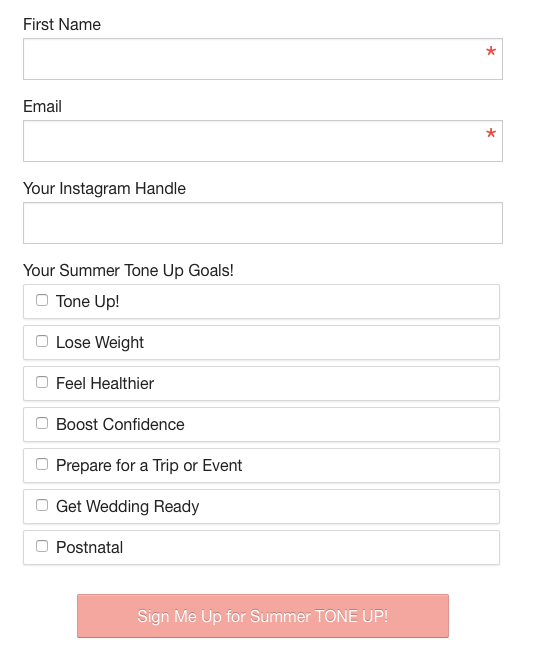
- Create a signup form you can put on your website, landing page and social media (see example below)
- Create an initial welcome email for when people sign up for your challenge
- Create a series of emails that are set to get sent out in 24-hour increments
- Create a wrap-up email to be sent on the last day of the challenge. Be sure to let people know how they can continue to connect with you after the challenge! Promote your Facebook page and/or group, as well as any relevant products or services they would appreciate.
Create a Facebook group for your challenge
Another key aspect of your challenge will be a Facebook group where participants can ask questions and get to know other members. It will also be a place for you to share additional tips or strategies.
Alternatively, you may want to actually carry out the lion’s share of your challenge right within the group. In this case, instead of sending out daily emails, you might post daily messages in your group.
If your goal is to build your list, be sure you’re still getting an email address when they sign up for the challenge! Otherwise, you’ll have no way to contact them once the challenge is over.
On the other hand, jf your goal is simply to gain some brand awareness (i.e. to get your name “out there” and make an inital connection on social media), there’s no need to require an email address.
Briefly, here’s how to create and structure your Facebook group for your challenge.
1. Create your group
Once logged into Facebook, click on the triangle at the top right of your screen. Click Create Group.
2. Give your group a descriptive name
I recommend adding a close friend or colleague while setting up the group (you have to add at least one person to get started). Then once your group is all set up and the challenge is ready to start, you can add all the people who have signed up for the challenge.
If you’re requiring an email to join the challenge, set your group privacy to Closed. If you’re doing the challenge in order to drive brand awareness (and therefore people don’t need to give an email to join), you’ll probably want to set it to Open (meaning anyone can see group posts, but only those who have joined can create new posts).
Add content to your group
After clicking Create, you’ll finalize your group creation by picking a group icon, and then will be taken to your group. You can now remove that friend you added previously!
You can now do all the usual stuff, like adding a cover photo and content to your group.
Your group is now ready for your challenge participants!
How to make money from your challenge
While creating and hosting a challenge is a lot of fun, when it comes down to it you want to make MONEY from it, right?
There are a number of ways you can do this – some are more indirect and will take longer, while others will generate immediate sales. It’s good to use a combination of both!
1. Challenge participants = leads for your business
If you’re requiring an email address to sign up for the challenge, you’ve already taken the first step at getting leads for your business.
Everyone who has signed up has entered your marketing funnel, and you can now continue communicating your offers and promotions even once the challenge is over.
As you continue to offer valuable content to your subscribers, their trust in you builds. Once they’re ready to buy, who do you think they’ll buy from: you, someone they know and trust, or Joe Schmoe down the street?
2. Promote your paid products or services during the challenge
Don’t be afraid to plug your products or services throughout the challenge! It could be as simple as including product links in your content, or offering discounts to your challenge subscribers.
Another strategy is to actually include a product tutorial as part of the challenge. For instance, if you’re doing a smoothie challenge, you could create a video showing how to make a healthy smoothie – using your favorite blender, which just happens to be available for sale on your site!
3. Offer paid content upgrades
While your challenge should be completely, 100% free, you can offer paid bonus content or upgrades to your participants.
If you already offer ebooks or other infoproducts relevant to your challenge topic, you could simply promote these during the challenge.
But another strategy is to offer the entire challenge all at once to participants who don’t want to wait the entire 7, 14, or 30 days to complete it. For a small fee, they can receive the whole challenge at once, and can work through it at their own pace.
You could also offer paid bonus content on your site, using a free plugin like Restrict Content. Some ideas for this bonus content include detailed instructional videos, in-depth tutorials, step-by-step how-to guides, etc.
4. Promote an affiliate product
An alternative to promoting your own products during your challenge is to promote someone else’s…for a fee! If you’re new to the world of affiliate marketing, an easy way to start out is by joining Amazon’s affiliate program and then including Amazon affiliate links in your content.
Other options include finding and promoting relevant products via affiliate networks like Clickbank, Shareasale or CJ Affiliate.
6 ways to generate buzz about your challenge
All this hard work isn’t going to mean much unless you have participants. This section will outline six ways you can get people talking about and signing up for your challenge.
1. Promote your challenge to your blog visitors, social media followers and email subscribers
Promote your challenge everywhere. If it’s designed to truly help your audience – and it’s FREE – don’t be afraid to spam your readers and followers with it!
Create simple graphics to promote your challenge using a free tool like Canva, and then put them in your blog sidebar and even right within your blog content.
I also recommend changing your social media cover photos to promote your challenge. Don’t forget to include a link so people will know where to sign up for your challenge!
2. Offer prizes during the challenge
Motivate your participants during the challenge by giving away prizes for meeting key goals along the way. Not only does this keep your members engaged, it can create a buzz about the challenge – both inside and outside the group.
Bonus: It’s a great way to draw attention to your own products or services!
3. Create a challenge hashtag participants can use
A challenge hashtag can be a great way to get people talking. Use it whenever you mention your challenge, and encourage your participants to use it
I also love the idea of using it on your challenge graphics (see above). This is a simple way to get the word out about your hashtag.
4. Build anticipation by hinting at your challenge in the days and weeks before it launches
The basic rules of product launches apply to launching your challenge. And one of the key principles of product launches is to generate some buzz BEFORE you actually launch the product.
This helps build anticipation and ensures people are ready to sign up on launch day!
5. Offer badges or banners for partipants to use on their own websites or blogs
I’ll let you in on a little secret: people who participate in challenges love for others to know what they’re doing!
One way to help them spread the word is to create simple badges they can use on their website or on social media.
Not a graphic designer? No problem! Anyone can create amazing graphics with the right tools. Check out my post 6 Free Tools To Create Amazing Eye-Catching Graphics.
6. Use Facebook ads
Don’t have a big following on social media, or just need to wrangle up some more participants? Facebook ads are a GREAT way to increase awareness and participation.
I highly recommend creating your own custom Facebook audience of people who already “like” pages similar to yours. Not sure where to start? This should help: How To Build A Rockin’ Facebook Ads Audience In 5 Quick and Easy Steps.
Final thoughts
I hope this post has gotten you excited about creating your own challenge. They really are one of the best ways to build to your list, create a sense of community and even increase sales!
I’d love to know if you plan to create a challenge….and if so, what’s it going to be called? Share with us in the comments below!

LIMITED TIME COMMITMENT RELEASES THE PRESSURE
Every desire to permanently change yourself is filled with at least a little pressure and self-doubt. The problem is that doubt kills more dreams than failure ever will.
It’s hard to change yourself. It’s extremely hard to start with a completely new lifestyle and do it forever. Forever! Who can be disciplined forever? That brings a huge pressure into your life. Consequently, you may do nothing instead.
30 Day Challenges remove the doubts over whether you have the stamina to persist at something new forever. You have to persist only for 30 days, no longer. 30 days is nothing compared to forever. Anyone can persist for 30 days.
You can absolutely persist for 30 days at any reasonable challenge you set for yourself.
GREAT WAY TO EXPERIMENT WITH WHAT WORKS AND WHAT DOESN’T
30 Day Challenges are an excellent way to do experiments in personal life and test if something works for you as an individual or not.
Persisting at something for 30 days is a period just long enough for you to get the whole picture of how the change affects your life – physically, emotionally, intellectually, spiritually, socially and materially. It’s like testing a shareware software for 30 days and then deciding if you buy it or not.
Here’s the thing. Usually when you implement a new change, the following happens. The first two to three days you ride the motivation wave, you’re proud of yourself and your discipline muscle is still functioning. After the first few days, the crisis occurs. The motivation perishes and the only thing left is willpower. You feel more tired, exhausted and emotionally irritated by the change. The crisis can last from one to two weeks.
Somewhere in the third week, things get stabilized and the crisis goes away. You know that more than half of the challenge is behind you, so you don’t have to persevere for much longer. Somehow you need less and less discipline every day. Your body, emotions, mind, spirit and people in your life get used to the new behavioral pattern. You can start measuring if you are getting the results and changes you want or not.
CONSISTENCY IS THE KEY TO DEVELOPING NEW HABITS
The good news is that it takes around 30 – 60 days to develop a new habit. After performing a 30 Day Challenge, it’s much easier to persist, towards 100 days, 365 days and then for however long you want to do something new.
Beginnings are always the hardest. If you slice and dice forever into small 30 Day Challenges and then 1 Year Challenges, you may even get to forever one step at a time.
The best way to keep consistency and really do a 30 Day Challenge is to visualize it on a calendar (Kanban principle). Stick a really big calendar on a wall in your home, with 30 boxes, one box for every day. Then draw a red cross in a box each day right after you complete the new desired action.
At the end, you want to have 30 crosses on your calendar. Having such a calendar helps a lot. The moment you wake up and see the calendar you’ll be ultra-motivated to perform the new habit.
JUST COMPLETED A 30 DAY CHALLENGE AND LEARNED SO MUCH
In August, I decided to write and publish a blog post every day.
The reason behind it was pretty simple. August is always the worst month in terms of traffic, since people are enjoying their holidays and spending more time outside. I wanted to meet my monthly traffic growth goals, and posting more content was my strategy to achieve that.
Besides that, it was a great exercise to train my writing attention span. The rules for my 30 Day Challenge were pretty simple. I only followed two: (1) Wake up early and write until you’re spent. (2) Publish a new blog post every day. That’s it. I successfully completed the challenge, and the findings and results were quite interesting.
I wrote around 150 letter pages. That’s basically a whole book. I successfully published a blog post every day. That was 31 blog posts, one extra since August has 31 days. I had the all-time most successful month regarding traffic to my blog. I definitely strengthened my writing muscle and enjoyed the challenge, but there were also a few downsides.
One big downside is that I was hurrying all the time to write as much as possible. Style and clarity began to suffer. I don’t like putting quantity over quality, no matter what I do in life.
Next to that, if you do too much of anything that you love, you start hating it. In the end, I couldn’t wait for August to end, so I could take a break. You can definitely get fatigued if you exaggerate with anything, and it takes all the enjoyment away from the activity. Nevertheless, it was definitely worth it. I only had to do it for 30 days, and that's always manageable.
Here are the blog posts I published as my 30 Day Challenge:
- Timing is everything – here is how to hit the perfect timing
- The 5 Whys technique – dig deep to find the root cause of any problem
- Emotional flashbacks – when your emotional response is out of proportion
- Complex PTSD: From Surviving to Thriving – Book Summary
- The execution mode – without execution skills everything is futile
- Learning is useless, validated learning is everything
- Rapid prototyping for designing a superior life strategy
- This is how to do experiments in your personal life (outside the bedroom)
- Business Model You – Book Summary – Reinvent your career
- Regular daily reflections will change the quality of your life forever
- You know nothing, so always put data before rhetoric
- Branching and forking – the ultimate way to stay agile in life
- Goal journey mapping – The superior strategy to achieve any goal
- Short life stories – clear goals with a powerful why
- Vision list prioritization or which goals to pursue first
- The only goal setting strategy that really works in the 21st century
- Immediately stop wasting your life
- How much relationship drama is just too much?
- Finding the balance between doing and being for all the workaholic
- Stupid decisions that can ruin your whole life in a second
- Don’t worry about failure, because you only have to be right once
- Life is just a dream – not really, but the idea can be useful
- A place to escape everyday life and reconnect with yourself
- Super healthy foods you simply must eat every day
- Hour of power – take one hour daily to invest into your future
- Wrong assumptions are the mother of all fuckups
- The proven ways to stop taking things personally
- Your mind is like a garden that needs a good daily care
- How long you should practice when you’re learning something new
- Daily cold showers will make you healthy, attractive and sharp
- Optimize your life for productivity and flexibility
That was a lot of work done.
I did several other 30 Day Challenges in the past (and even 365 Day Challenges). Some of them ended successfully with me implementing a new habit into my life, others gave me mixed feelings, like the writing challenge did. For example, I didn’t drink alcohol for one year. Nothing, not even a sip at big celebrations. It felt great. Then I decided to do something for my body every day for 30 days and it also felt great.
Once, I also decided to brainstorm business ideas every day for a month. It was an extremely good experience and I found many great ideas. On the other hand, I ate only raw food for a year which ended awfully, and also completed some other challenges that didn’t end so well.
At the end, it’s all about experimenting and finding what works for you and what doesn’t, where is the limit when you still enjoy the activity and where too much good turns into bad. It’s about finding the right balance between trying new things, being persistent and listening to yourself.


No comments:
Post a Comment